
Tech
Nano Banana 2.5 and the Changing Role of AI in Visual Content Creation

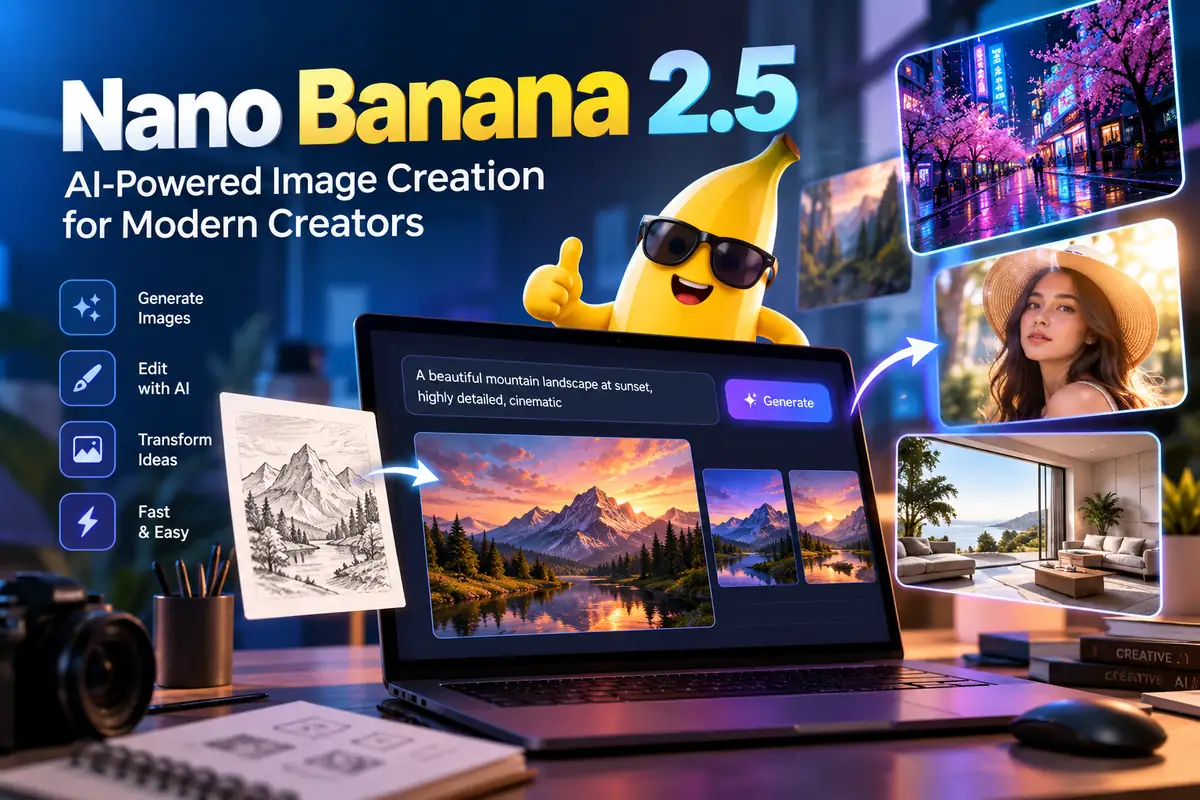
Artificial intelligence is changing the way people create and edit visual content. Tasks that once required advanced design skills, professional software, and considerable time can increasingly be handled with AI-assisted tools. From generating creative concepts to modifying existing images, these technologies are becoming useful across marketing, social media, e-commerce, education, and everyday content creation.
One technology attracting attention in this space is Nano Banana 2.5. It reflects a broader shift toward AI tools that focus on making visual creation faster and more accessible. Rather than replacing traditional creative software entirely, such technology can support existing workflows by helping users move from an idea to a usable visual more efficiently.
What Is Nano Banana 2.5?
Nano Banana 2.5 is associated with the growing category of AI-powered image generation and editing technology. These systems are designed to interpret natural-language instructions and use them to create or transform visual content.
Instead of manually adjusting every part of an image, a user can describe the desired result through a prompt. Depending on the available features and implementation, AI-assisted workflows can help with tasks such as developing visual concepts, modifying scenes, experimenting with styles, or preparing imagery for digital content.
For people interested in exploring this type of workflow, Nano Banana 2.5 provides a useful example of how AI-based visual creation can be incorporated into a modern content-production environment.
Why AI Image Tools Are Becoming More Relevant
Visual content has become an important part of online communication. Websites need featured images, online stores require product visuals, and social platforms depend heavily on graphics, photographs, and short-form video. Producing enough original visual material for all these channels can require significant resources.
AI can reduce some of that workload. A creator may use it to test several concepts before developing the final design. A marketer might explore different backgrounds or compositions for a campaign, while a small business could use AI-generated concepts when professional photography is not practical during the early stages of a project.
Speed, however, is only one advantage. AI also lowers the technical barrier to experimentation. Someone without extensive experience in traditional image-editing software can communicate an idea in ordinary language and quickly see possible visual interpretations.
Natural-Language Prompts Are Changing Creative Workflows
One of the most significant developments in generative AI is the growing importance of natural-language interaction. Traditional design software usually requires users to understand tools, layers, masks, filters, and other technical controls. AI introduces another approach: describing the intended result.
For example, a creator can specify the setting, lighting, composition, mood, subject, and general visual direction in a written prompt. The system then interprets those instructions and produces a corresponding result.
This approach does not eliminate the need for creative judgment. In fact, knowing what to ask for becomes increasingly important. Clear prompts generally provide the system with better context, while vague instructions may produce results that require additional refinement.
As a result, prompt writing is becoming part of the creative process itself.
AI as an Assistant Rather Than a Replacement
It is tempting to view AI image technology as a replacement for photographers, designers, and editors. In practice, a more useful way to understand these tools is as assistants within a larger creative workflow.
Human creators still make important decisions about branding, storytelling, accuracy, composition, and audience expectations. AI can accelerate repetitive or exploratory parts of the process, but people determine whether the final result actually communicates the intended message.
A graphic designer, for instance, might generate several initial concepts with AI and then refine one manually. Similarly, a social media manager could explore multiple visual directions before selecting the version that best matches a campaign.
This combination of automation and human oversight can provide both efficiency and creative control.
Where This Technology Can Be Useful
AI-powered visual tools have potential applications across many industries. Digital marketers can use them when brainstorming campaign concepts or preparing social content. Bloggers and publishers may explore AI-generated imagery for articles when appropriate, while e-commerce teams can experiment with different visual settings for products.
Video creators can also benefit because image generation increasingly overlaps with broader multimedia workflows. Concept art, backgrounds, thumbnails, storyboarding, and other visual assets can become part of the video-production process.
Meanwhile, educators and presentation creators can use generated visuals to explain ideas that may be difficult to communicate through text alone. The usefulness of the technology therefore extends beyond professional designers.
The Importance of Consistency and Quality
Generating an image quickly does not automatically make it suitable for publication. Quality control remains essential, particularly when visuals represent a company, product, or public-facing project.
Creators should review generated images for obvious errors, inconsistent details, unwanted text, unusual anatomy, inaccurate objects, and other visual problems. They should also consider whether an image matches the tone and identity of the surrounding content.
Consistency matters as well. Brands usually rely on recognizable visual characteristics, including typography, composition, lighting, and overall style. AI-generated content works best when it supports those characteristics instead of creating a completely different visual identity with every image.
Therefore, generation should usually be followed by careful selection and, where necessary, additional editing.
Responsible Use of AI-Generated Images
As AI-generated media becomes more realistic, responsible use becomes increasingly important. Users should consider copyright, privacy, platform rules, commercial-use conditions, and the possibility of misleading audiences.
Extra care is needed when creating realistic images of identifiable people or depicting events that did not occur. Content that could reasonably be mistaken for authentic photography may require context or disclosure depending on how and where it is published.
Businesses should also review the terms governing any AI service they use, particularly before incorporating generated material into advertising, client work, or commercial products.
AI can simplify creation, but the person publishing the content remains responsible for how that material is used.
What AI Visual Creation Could Look Like Next
The direction of AI visual technology suggests that generation and editing will continue to become more closely connected. Instead of moving between numerous applications, creators may increasingly be able to generate an asset, modify specific elements, and incorporate it into a larger project within a single workflow.
Greater control is also likely to remain an important area of development. Users want more than attractive outputs; they need predictable results that follow instructions closely and can be refined without rebuilding an entire image.
This matters particularly for professional content creation. A marketing team may need multiple assets that share a consistent look, while a creator may want to adjust only one element without changing everything else.
The most practical AI tools will therefore be those that combine generation speed with useful editing control.
Conclusion
Nano Banana 2.5 represents part of a much larger change in digital creativity. AI-powered image technology is making visual experimentation faster and more accessible while giving creators new ways to turn written ideas into visual concepts.
However, successful content creation still depends on human judgment. Strong prompts, careful review, brand consistency, responsible publishing, and thoughtful editing remain important. Rather than viewing AI as a shortcut that does everything automatically, creators can use it as another tool in the production process.
As these technologies continue to develop, the most effective workflows will likely combine the speed of artificial intelligence with the context, creativity, and decision-making that people bring to the final result.

Nano Banana 2.5 and the Changing Role of AI in Visual Content Creation

How Does an AI Image Generator from Text Help Fashion and Lifestyle Creators in 2026?

Is a ChatGPT Video Editor the Future of Content Creation for Women Creators?

How Can an AI Image Generator Fit Into Your Creative Routine?

How Poor Sleep Affects Your Body, Mood And Long-Term Health

The New Z library Official Site Address Explained For First-Time Visitors

Golden State Warriors vs Lakers Match Player Stats and Game Analysis

Lakers vs Houston Rockets Match Player Stats and Game Analysis

Timberwolves vs Denver Nuggets Match Player Stats and Game Analysis

Do You Really Need Glue for a Lace Front Hair Topper? Exploring Glueless Options
Nano Banana 2.5 and the Changing Role of AI in Visual Content Creation
How Does an AI Image Generator from Text Help Fashion and Lifestyle Creators in 2026?
Nano Banana 2.5 and the Changing Role of AI in Visual Content Creation
How Does an AI Image Generator from Text Help Fashion and Lifestyle Creators in 2026?
Is a ChatGPT Video Editor the Future of Content Creation for Women Creators?
How Can an AI Image Generator Fit Into Your Creative Routine?
How Poor Sleep Affects Your Body, Mood And Long-Term Health
The New Z library Official Site Address Explained For First-Time Visitors
Golden State Warriors vs Lakers Match Player Stats and Game Analysis
Lakers vs Houston Rockets Match Player Stats and Game Analysis
Timberwolves vs Denver Nuggets Match Player Stats and Game Analysis
Do You Really Need Glue for a Lace Front Hair Topper? Exploring Glueless Options
-

 Fashion9 months ago
White Nails: Health, Causes, Science, and Long-Term Nail Care Explained
-
 Travel4 months ago
Celebrate Tradition: Europe’s Most Enchanting Fairs and Festivals
-

 Security8 months ago
Data Lake Security: Using Engineering Services to Keep Your Data Safe
-
 Tech2 months ago
The New Z library Official Site Address Explained For First-Time Visitors